
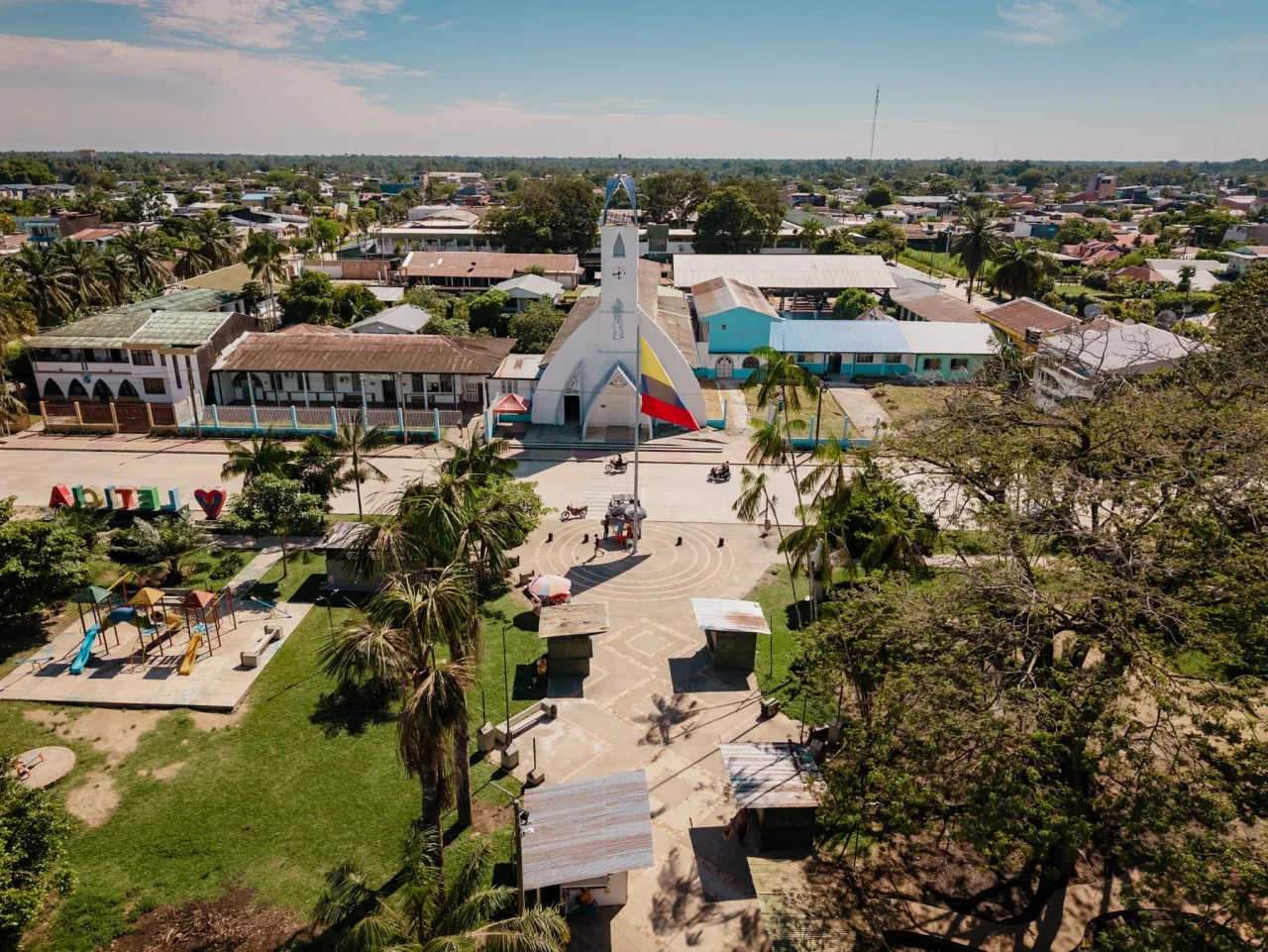
Crossing between Leticia, Tabatinga (Brazil) and Santa Rosa (Peru) needs no immigration formalities; going farther (Manaus, Iquitos or Caballococha) does. In Colombia your entry stamp has a limit of days, and in total you cannot exceed 180 days per calendar year. Here is how entry and exit stamps work in the three countries and how to extend your stay.
I’m Sergio Rojas, a tour guide in Leticia. I live in the triple border and I get these questions every day. This guide does not replace Immigration: rules can change, so always confirm with the official offices.
Guide updated in October 2026
The Colombian entry stamp
Many tourists do not need a visa to enter Colombia: on arrival, Migración Colombia puts an entry stamp in your passport with the date and the days allowed. Whether your nationality needs a visa is something you confirm with Colombia’s Foreign Ministry before you travel.
The officer decides the number of days when you enter. Usually you get around 45 days for a vacation, and the total can reach a maximum of 180 days per calendar year (January 1 to December 31, consecutive or not). Always check the days written on your stamp.
Crossing the triple border without formalities
Leticia (Colombia), Tabatinga (Brazil) and Santa Rosa (Peru) work as one free-movement area: crossing between the three countries needs no immigration formalities. You can have breakfast in Leticia, lunch in Santa Rosa and dinner in Tabatinga on the same day. Tabatinga is a walk away; Santa Rosa is a short boat ride. Still, always carry your passport or ID.
When you do need entry and exit stamps
Formalities begin when you leave the triple-border area. If you are in Colombia and head to Manaus (Brazil), Iquitos (Peru) or Caballococha (Peru), you must complete immigration formalities, just like a Peruvian or a Brazilian crossing into another country. Caballococha, in particular, now requires formalities too.
- To Peru: exit stamp from Colombia and entry at Peruvian Migraciones, in Santa Rosa.
- To Brazil: exit stamp from Colombia and entry at the Brazilian Federal Police, in Tabatinga.
- Back to Colombia: exit stamp from the country you leave and a new entry stamp from Migración Colombia (at Leticia airport).
Where and when: offices and hours
- Colombia (Migración Colombia): at Leticia airport, 7:00 a.m. to 6:00 p.m. They are also handling procedures at an office in downtown Leticia.
- Peru (Migraciones): in Santa Rosa, 7:00 a.m. to 5:00 p.m., no lunch break.
- Brazil (Federal Police): in Tabatinga, 8:00 a.m. to 12:00 noon and 2:00 p.m. to 6:00 p.m.
Step by step, by country
Via Peru (Santa Rosa)
- Leave Leticia for Santa Rosa and get your exit stamp from Colombia.
- Complete the entry procedure at the Peruvian Migraciones office in Santa Rosa.
- To return, process your exit from Peru and re-enter Colombia through Leticia airport to get the new stamp.
Via Brazil (Tabatinga)
- Get your exit stamp from Colombia at the immigration office inside Leticia airport.
- Cross into Tabatinga and complete the entry procedure at the Federal Police.
- To return, process your exit from Brazil and re-enter Colombia through Leticia airport to secure your stamp.
These steps carry no official fee in themselves, beyond the boat ride or the walk. When you re-enter Colombia, the officer decides how many days to give you based on your case, always within the maximum of 180 days per calendar year.
How to extend your stay in Colombia
- Ask Migración Colombia for an extension before your permit expires. It is not automatic and has a fee; confirm the amount and how to apply (online or at the office) on the official site.
- Leave and re-enter through the border, as in the step-by-step above. The officer decides the days on the new stamp; do not count on a fixed number.
Make the most of your days in the Amazon
With a few extra days in Leticia you can see the jungle, Puerto Nariño and the Indigenous communities. I run Amazonas Jungle Tours (RNT 94153): we offer 2-, 3- and 4-day tours departing from Leticia.
See tours in Leticia Amazonas Jungle Tours (opens in a new tab)
Frequently asked questions
Do I need formalities to cross between Leticia, Tabatinga and Santa Rosa?
No. Crossing between the three triple-border towns needs no immigration formalities, but always carry your passport or ID.
When do I need entry and exit stamps?
When you go beyond the triple border, for example to Manaus, Iquitos or Caballococha. There you must complete immigration formalities, just like a Peruvian or a Brazilian.
How many days do I get when I enter Colombia?
The immigration officer decides when you enter. Usually it is around 45 days for a vacation, and the total cannot exceed 180 days per calendar year. Check the days written on your stamp.
How do I extend my tourist permit in Colombia?
By asking Migración Colombia for an extension before it expires (there is a fee), or by leaving through the border and re-entering; in that case the officer decides the days on the new stamp. Either way, the maximum is 180 days per calendar year.
Do I get a fresh 90 days if I cross to Peru or Brazil and come back?
I cannot guarantee that. When you re-enter, the officer decides how many days to give you, always within the 180-day-per-calendar-year maximum. Ask at the Migración office at Leticia airport.
Where and when do I do the formalities?
In Colombia, at Leticia airport (7:00 a.m. to 6:00 p.m.) and at an office downtown; in Peru, in Santa Rosa (7:00 a.m. to 5:00 p.m.); in Brazil, at the Federal Police in Tabatinga (8:00 a.m. to 12:00 noon and 2:00 p.m. to 6:00 p.m.).
What happens if I overstay?
You may receive a fine or have problems when leaving the country. Keep track of your days and check with Migración before your stamp expires.