
The Amazon in Summer Season: A Practical Guide to Make the Most of Every Day
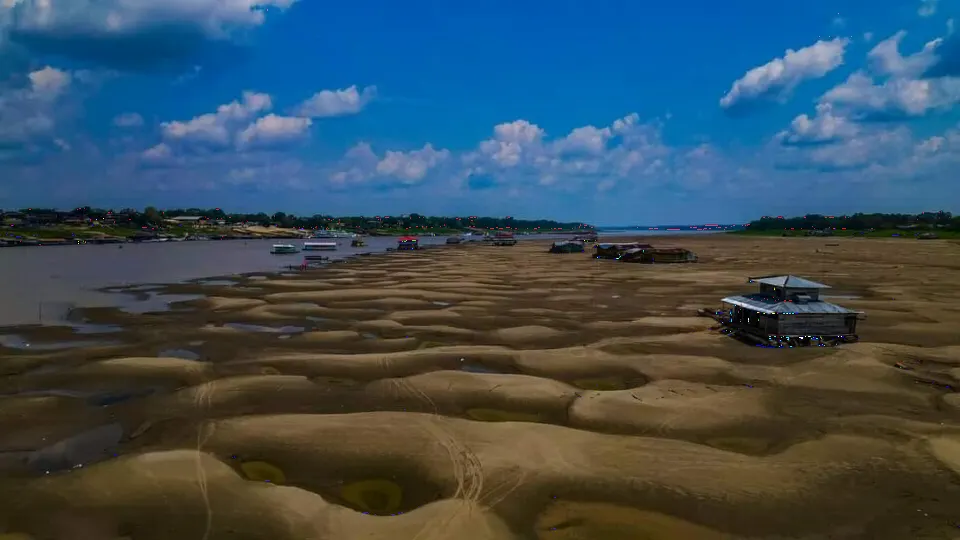
There is a time of year when the Amazon River reveals something few people imagine when they think of the rainforest: its beaches. Miles of white sand emerging from the banks as the water recedes, wildlife concentrating in the main channels, and rainforest trails becoming passable again. That is summer season in the Amazon, and it is why most travelers arriving in Leticia for the first time choose this period.
But there are things no one tells you before booking. This guide does.
The river cycle: why the Amazon drops
The Amazon doesn't rise and fall because of local rain in Leticia. What moves the river level is rainfall in the Peruvian Andes, hundreds of kilometers to the west. When that rain eases up, the water feeding the Amazon system decreases, the river drops, and the lower rainforest is exposed.
That drop can be as much as 8 meters between the year's highest and lowest levels. Eight meters that completely transform the landscape: where there was water, there is now land; where there was submerged land, beaches appear; and trails that were underwater during high-water season become passable again.
When exactly is summer season?
The river starts dropping in June. The process speeds up in July and August, hits its lowest point in September, and from November the water starts recovering. Summer season runs from June through November, with peak dry conditions between August and October.
- June-July — transition toward the dry period, first beaches.
- August-September — peak dry season, beaches at their largest, more heat, more tourists.
- October-November — the river starts recovering, an excellent time to visit with fewer people.
Real climate during summer season
There is a truth travelers discover once they arrive: it rains every day of the year in the Amazon. Summer season is not synonymous with permanently dry weather. What changes is the rain pattern.
What's normal any time of year is a roughly one-hour downpour per day. It can fall in the morning, afternoon, or before dawn. It falls, stops, the sky clears, and the day goes on. What disappears in summer season are the long, multi-day stretches of rain that do occur during high water.
Temperature: between 25°C and 32°C (77-90°F) under normal conditions. In August and September, heat can reach 37°C (99°F) with a heat index of 40°C (104°F) or more. It is Amazonian heat — humid, dense, different from coastal or plains heat. Constant hydration is not a suggestion, it is a necessity.
Skies: clearer than during high water, better light for photography, more usable sun hours.
The river beaches: the big secret
If there is one single reason to choose summer season, this is it: the beaches of the Amazon River. Facing Leticia, facing Puerto Nariño, along the tributaries — white sands that emerge as the water drops and disappear completely once it rises again.
These are not mass-tourism beaches. They are natural, quiet spaces where the only backdrop is the Amazon rainforest and the world's largest river. You can swim, rest, watch the sunset from the shore. It is an experience that simply does not exist during high-water season.
The best beach spots are facing Puerto Nariño and along the Amazon tributaries visited during river tours.
Wildlife in summer season: easier to see
With the high water of the flood season, Amazonian animals scatter across miles of flooded rainforest. With low river levels, everything changes: fish concentrate in the main channels, and predators follow the fish.
Pink and gray dolphins benefit the most from this, from a tourist perspective. During summer season they stay in the main river, in Lake Tarapoto, in channels accessible by boat. They are more predictable, easier to follow, closer. Sightings during this season are more consistent.
The same applies to birds: riverside vegetation is less dense, and the viewing angle from the boat is better. The parrots at Santander Park in Leticia, which arrive in flocks every afternoon around 5 pm, are a spectacle that doesn't depend on the season — but the dry-season sunset light makes them especially photogenic.
Advantages of coming during summer season
- Mobility on land — dry trails allow for longer, more comfortable hikes, reaching indigenous communities and rainforest areas that have limited access during high water.
- River beaches — exclusive to this season: swimming in the Amazon, resting on the sand, photographing the sunset from the shore.
- Animal visibility — more concentrated, more predictable, more accessible wildlife from the boat.
- Photography — better light, clearer skies, better conditions for capturing the Amazon.
- Sport fishing — fish concentrated in the channels makes piranha fishing in the Tarapoto Lakes especially productive.
Downsides you should know
August is peak season: the year's driest month is also its busiest and priciest for flights. Leticia fills up with travelers, mainly Europeans on summer vacation, and airfares soar. The solution: book well in advance or choose July or October as equally good alternatives.
Kayaking through the flooded forest is not available: one of the most extraordinary Amazon experiences — paddling among the submerged trees of the Yahuarcaca lake system — requires high water. During summer season there is not enough water for that. That activity is exclusive to high-water season.
The August-September heat: midday hours during peak dry season are intense. A good tour schedules mornings and afternoons for main activities. Without sunscreen and disciplined hydration, your body feels it.
Month by month: when to go and how many days
- June — the river starts dropping; first beaches, transition; 5 days recommended.
- July — dropped significantly; beaches, trails, fewer tourists; 5 days recommended.
- August — peak dry season; beaches at their largest, concentrated wildlife; 4 days recommended.
- September — lowest level; peak dryness, fewer tourists than August; 4 days recommended.
- October — starts rising slightly; excellent value; 4 days recommended.
- November — rising; transition, two worlds at once; 4-5 days recommended.
Activities exclusive to summer season
- Amazon River beaches — swimming, resting, photography. Only between July and November.
- Dolphin watching by boat — Lake Tarapoto and the Leticia-Puerto Nariño route are the best spots; departure at 7 am from Leticia's civil port.
- Hikes on dry trails — the rainforest on foot, with guides who know every plant and animal; available year-round, but trails are in their best condition during summer season.
- Piranha fishing — at the Tarapoto Lakes; local guides teach the traditional technique.
- Night safari — caimans, nocturnal birds, glowing insects; during summer season, dry trails allow more mobility; flashlight required.
- Tree climbing — in Tanimboca or Omagua, 11 km from Leticia, up to 35 meters high, with rappelling, ziplining, and hanging bridges; available year-round.
- Parrot spectacle at Santander Park — free, daily, at 5 pm; the sunset light of summer season makes the photos especially good.
What to pack for this season
- DEET repellent — the number one item any season.
- SPF 50+ sunscreen — the sun is more intense during summer season.
- Rubber boots, not hiking boots — Amazonian mud destroys them, and rubber protects against snakes.
- Light, quick-drying, long-sleeved clothing.
- A wide-brimmed hat.
- A poncho — it rains an hour a day in any season.
- Waterproof dry bags for electronics.
- A flashlight and power bank.
- A 25-30 liter backpack — you have to walk to the river; rolling suitcases are a real problem.
The final decision
Summer season is the most comfortable entry point to the Amazon. Not because high water is inferior — it is extraordinary in its own way — but because for someone visiting the Amazon rainforest for the first time, dry trails, concentrated wildlife, beaches, and good light make the experience more accessible and easier to enjoy without logistics eating up your energy.
If you have to pick a first time, choose summer season. And when you come back — because you will come back — choose high water.
Want to experience the Amazon summer season with guides who know the river by heart? We have all-inclusive 3, 4, and 5-day plans.
Frequently asked questions
When exactly is summer season in the Colombian Amazon?
From June to November, with the lowest river point in September. June and July are ideal to start, August and September are the peak, October and November are excellent with fewer tourists.
Does it rain during summer season in the Amazon?
Yes. It rains every day of the year in the Amazon, including during summer season. Typically about an hour of rain falls per day, stops, and does not return until the next day. The rain pattern is the same in summer season and high water — what changes is the river level, not the local rainfall.
How many days are enough to visit the Amazon during summer season?
4 days is the sweet spot. In July it can extend to 5. More than 5 days at peak dry season can become repetitive because flooded-forest kayaking is not available.
Can you swim in the Amazon River during summer season?
Yes, and it is the best time to do it. Between July and November, natural beaches emerge where you can swim under the guide's supervision.
Is summer season or high water better for seeing dolphins?
Dolphins can be seen year-round. During summer season they are more concentrated in the main channels, making sightings from the boat easier. During high water they move into the lakes and flooded forest, where kayak sightings are more immersive but less predictable.