
History, Economy, and Reality of Leticia, Amazonas
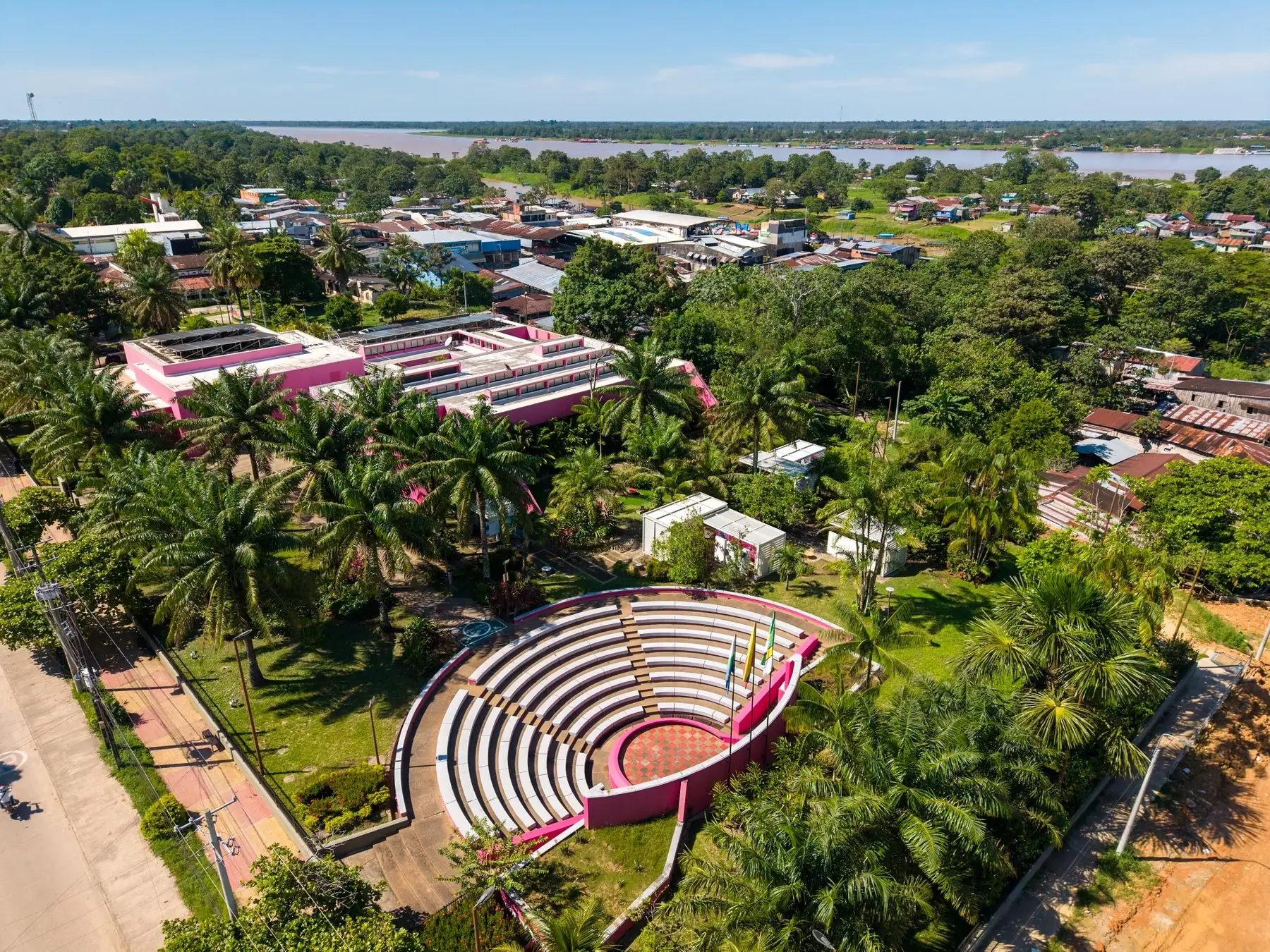
Leticia is a city unlike any other in the world. Located at the southern tip of Colombia, on the banks of the mighty Amazon River, it is far more than the capital of its namesake department: it is a meeting point where the cultures, economies, and realities of three different countries —Colombia, Brazil, and Peru— converge in a single geographic setting.
Indigenous origins and the founding of Leticia
Long before Leticia became a strategic port or a tourist destination, this region was inhabited by indigenous peoples such as the Tikuna, Yagua, Cocama, and Huitoto, who built ways of life grounded in respect for the forest and its natural cycles. The rainforest provided food, medicine, and building materials, while the Amazon River and its tributaries served as the great highway for transport and trade. Communities organized their lives around malokas, communal houses where decisions were made, oral tradition was passed down, and spiritual ceremonies were held.
Leticia's official founding took place on April 25, 1867, under Peruvian administration, and in its earliest years it was named San Antonio. Shortly after, in December of that same year, it was renamed Leticia. Several accounts explain the origin of the name: some historians claim it was a tribute to Leticia Smith, a young woman living in Iquitos who had won the affections of military officers; others hold that it comes from the Latin term Laetitia, meaning joy. Either way, the settlement was born with a riverine and military purpose, established as a checkpoint for trade and navigation in this strategic stretch of the Amazon River.
The Salomón-Lozano Treaty and the Colombia-Peru conflict
Leticia's history took a turn in 1922, when Colombia and Peru signed the Salomón-Lozano Treaty, under which Peru ceded to Colombia the strip of land known as the "Amazon Trapeze." The agreement sought to close long-standing territorial disputes, but it sparked strong discontent among sectors of Peruvian society, who felt a key territory had been handed over unjustly.
Tensions escalated in 1932, when a group of Peruvian civilians, backed by military forces, occupied Leticia in what became known as the "taking of Leticia." This event triggered the Colombia-Peru conflict, a diplomatic and military crisis that involved both countries for nearly two years. The dispute was finally resolved through mediation by the League of Nations and the signing of the Rio de Janeiro Protocol in 1934, which affirmed Colombia's sovereignty over Leticia. From that point on, the Colombian state consolidated its presence in the region, built administrative and military infrastructure, and promoted settlement efforts to secure the Amazon's integration with the rest of the country.
20th-century Leticia: consolidation and change
With the conflict resolved, Leticia entered a period of consolidation as the capital of the Amazonas department. Throughout the first half of the 20th century, schools, hospitals, churches, and ports were built, gradually turning the settlement into a city. Settlers arriving from Colombia's interior drove local trade, and exchange with the neighboring cities of Tabatinga (Brazil) and Santa Rosa (Peru) turned Leticia into a space of cross-border coexistence.
During the Amazon rubber boom (late 19th and early 20th centuries), Leticia was a waypoint for traders and businessmen exploiting the region's natural resources. Real economic change, however, arrived in the second half of the 20th century, when nature tourism and scientific research began drawing international interest. Travelers attracted by the Amazon rainforest arrived in search of unique experiences: wildlife spotting, jungle hikes, contact with indigenous communities, and navigating the mightiest river on Earth.
Leticia's economy: between border trade and tourism
Leticia's economy rests on several main pillars. Traditionally, families have made a living from small-scale fishing, subsistence farming (cassava, plantain, Amazon fruits like copoazú, arazá, and camu camu), and handicraft sales. But as a border city, cross-border trade is a key driver: goods move daily between Leticia, Tabatinga, and Santa Rosa, from food products to imported technology.
The city's heavy supply chain —food, building materials, machinery, and fuel— comes mainly from inland Colombia via a river route starting in Puerto Asís (Putumayo). Boats travel down the Putumayo River to its mouth on the Amazon, then continue downriver to Leticia. This journey can take several days, and it is vital for keeping basic goods in supply. With no roads connecting it to the rest of Colombia, the river is literally the city's lifeline.
Over the past 30 years, ecological and cultural tourism has become the most dynamic economic driver. Hotels, travel agencies, local guides, and indigenous communities all take part in a circuit that draws visitors from around the world. Pink dolphin watching, visits to Monkey Island, tours through Puerto Nariño, and night hikes through the rainforest have made Leticia one of South America's must-see ecotourism destinations.
Amazonian cuisine in Leticia
Leticia's cuisine reflects its cultural diversity and natural richness. River fish is the undisputed star, prepared in countless ways: pirarucú, one of the largest freshwater fish in the world, is served as fillets or fried crackling; patarashca, fish grilled in bijao leaves, is a signature dish of indigenous communities. These flavors mix with Peruvian influences like Amazonian ceviche or papa a la huancaína, and Brazilian touches like grilled meats and black beans.
Rainforest fruits also play a starring role: copoazú, camu camu, and arazá are eaten fresh and turned into juices, ice cream, and desserts. Visitors to Leticia find in its cuisine a journey of flavors that bridges the ancestral and the contemporary, reflecting the region's rich biocultural heritage.
Climate and seasons in Leticia
Leticia's climate is tropical and humid year-round, with temperatures ranging between 26°C and 32°C (79°F–90°F) and very high relative humidity. Even so, two seasons stand out, defined by river levels.
- Rainy season (winter) — from March to June, rainfall increases significantly and the Amazon River rises, flooding riverside areas and covering the sandy beaches. It is the ideal time to navigate inland lakes and streams.
- Dry season (summer) — from July to September, the river level drops and natural beaches appear, turning into swimming spots. It is also the perfect time to spot wildlife gathered along the riverbanks.
These cycles are vital for tourism and daily life alike, since they determine mobility, resource availability, and economic activity.
Puerto Nariño and its indigenous communities
85 kilometers upriver lies Puerto Nariño, the second municipality in the department. Known as the "natural nativity scene of the Amazon," it is a model of sustainability: there are no motor vehicles, and life unfolds along pedestrian paths, wooden houses, and lookout points with spectacular river views.
Puerto Nariño is home mainly to Ticuna, Yagua, and Cocama indigenous people, who keep their traditions alive and take an active part in community-based tourism. Cultural performances, craft fairs, and conservation activities give visitors a close-up view of indigenous worldviews and their relationship with the forest.
The triple border: Leticia, Tabatinga, and Santa Rosa
One of Leticia's most fascinating features is that it forms part of an international triple border. To the east, it directly borders Tabatinga (Brazil), a city it shares streets, trade, and even families with. There is no clear physical barrier between the two, allowing residents to cross back and forth daily. To the south, across the river, lies Santa Rosa (Peru), a settlement on an island that serves as a crossing point for travelers and traders.
This border dynamic means three languages are spoken in Leticia (Spanish, Portuguese, and in some cases Quechua or other indigenous languages), different currencies circulate, and local markets offer products from all three nations. It is a small-scale social and economic laboratory where globalization plays out with a distinctly Amazonian character.
Challenges and outlook for the future
Despite its cultural and natural wealth, Leticia faces major challenges. One is the sedimentation of the Amazon River in the stretch known as the Nazareth Strait, which threatens to leave Leticia's port unusable in the coming years, affecting supply chains and river connectivity.
Even so, enormous opportunities remain. Sustainable tourism can be key to strengthening the local economy, provided it is built with the active participation of indigenous communities and backed by conservation policies. Leticia's cultural wealth, biodiversity, and strategic location make it a key point not only for Colombia, but for the entire Amazon.
Frequently asked questions
When was Leticia founded?
On April 25, 1867, under Peruvian administration, under the name San Antonio; it was renamed Leticia in December of that same year.
What was the Colombia-Peru conflict over Leticia?
A diplomatic and military crisis that began in 1932 with the "taking of Leticia" by Peruvian civilians backed by military forces, resolved in 1934 with the Rio de Janeiro Protocol, which affirmed Colombia's sovereignty over the city.
What are Leticia's two seasons?
The rainy season (winter), from March to June, and the dry season (summer), from July to September, defined by the level of the Amazon River.